Monitoring Air Quality and Managing Dust
Mid West Ports implements leading dust management practices and monitors dust emissions from bulk product handling at our Geraldton Port operations.
Since 2021, more than $4.3 million has been invested in dust mitigation measures across the Port of Geraldton, with further upgrades underway. This includes the recently completed $10 million upgrade to one of the port’s iron ore storage sheds to improve containment through re-sheeting and enhanced dust extraction systems.
Continuous dust monitoring shows a reduction in port-related dust exceedances since 2021. We remain committed to transparent reporting and engagement through established community consultation forums, while also providing our full cooperation to DWER as their investigation into dust is underway.
Frequently Asked Questions
What is Department of Water and Environmental Regulation (DWER) investigating?
DWER has released an investigation update. These results and next steps can be found here>>.
We are cooperating with DWER and providing information to support their investigation. As this is an independent process, we cannot comment on the outcome until it is complete.
How can I stay up to date on the DWER investigation?
DWER have established a dedicated Geraldton Dust Investigation webpage which is frequently updated. You can find this linked here >>.
Is all dust in Geraldton from Port operations?
No. Dust can come from a range of sources including natural conditions, weather, transport, industry and other activities.
Our role is to manage dust associated with port operations and work with our customers, leaseholders and regulators to minimise potential impacts.
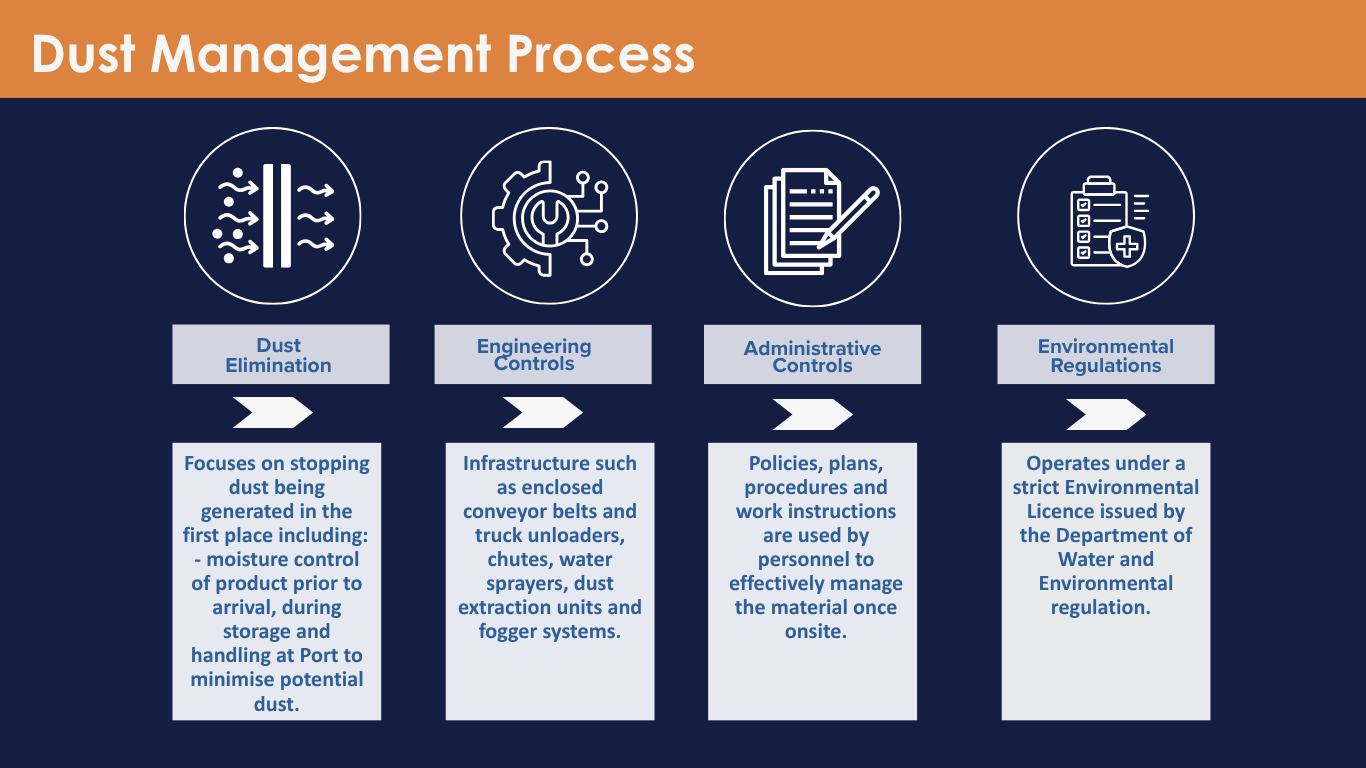
What is Mid West Ports doing to manage dust?
We have implemented a range of measures, including:
- real-time air quality monitoring;
- dust suppression systems;
- operational controls;
- dust modelling; and
- infrastructure upgrades to improve dust management.
We continue to look for opportunities to improve.
How does Mid West Port monitor air quality?
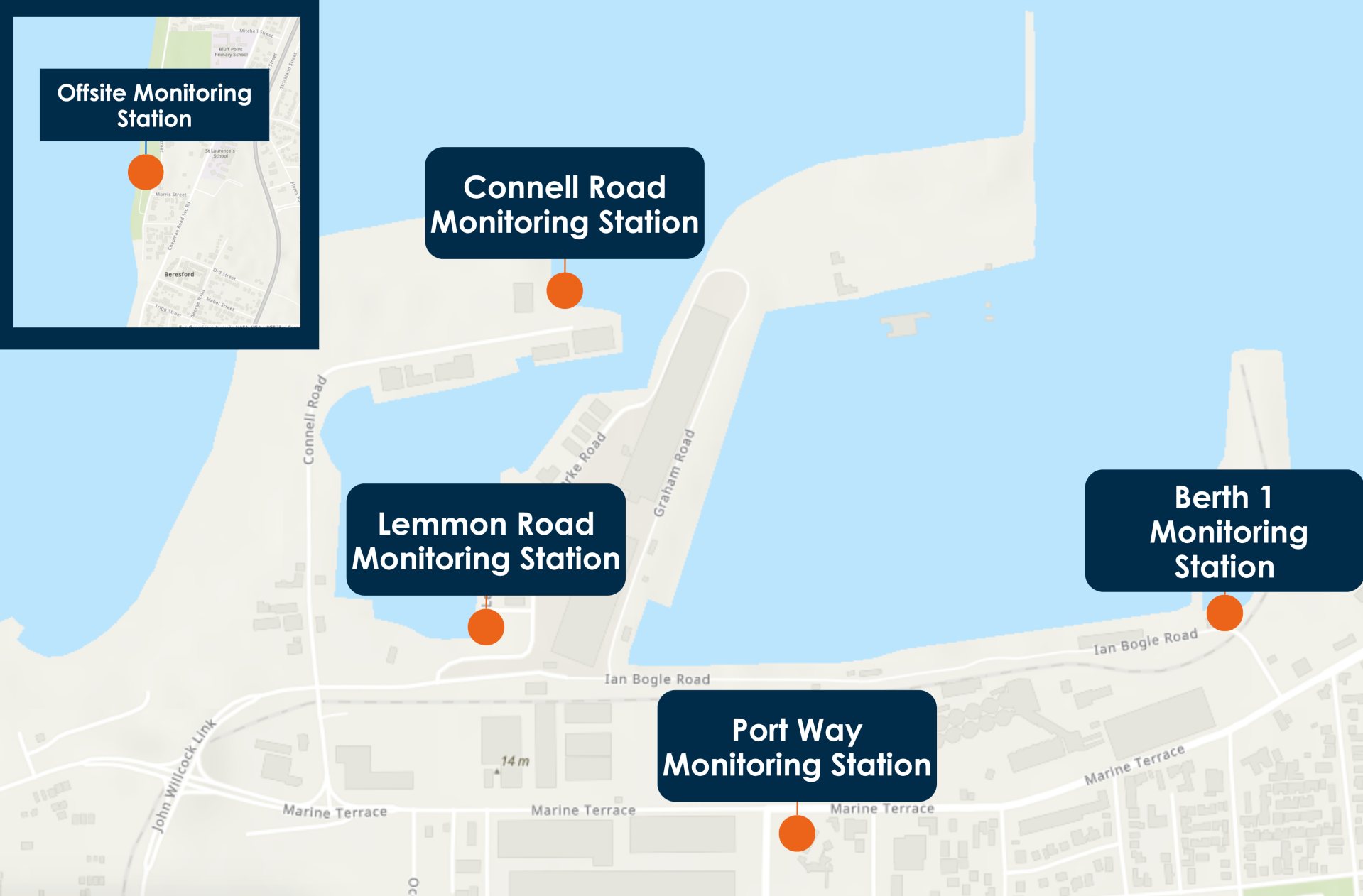
We operate real-time PM₁₀ monitoring stations around the Port boundary at Port Way, Connell Road, Lemmon Road and Berth 1, with a background monitor located at Bluff Point.
This data helps us understand air quality trends and support operational decision-making.
Can the community see air quality data?
Yes. Real-time air quality data is available through our online monitoring portal - available here >>.
The data is unvalidated real-time information, with validated results reported to DWER and published on our website.
What is PM₁₀?
PM₁₀ refers to airborne particles smaller than 10 micrometres in diameter. Monitoring PM₁₀ helps us understand airborne particle levels and identify trends.
How much has Mid West Ports invested in dust management?
We have invested more than $4.3 million since 2021 in dust management initiatives, including monitoring, infrastructure upgrades and operational improvements. Recent investments include upgrades to Lease 88, dust suppression systems and other measures to improve environmental performance.
What is being done with port users and leaseholders?
Dust management is a shared responsibility. We work with port users and leaseholders to improve practices, strengthen controls and support ongoing improvements.
Where can I find more information?
Further resources are available for download below. We also welcome the community to submit further questions or feedback by completing the following form:
Feedback / Ask a Question Form
Community Resources
Air Quality Monitoring Stations:
Where are these located?
There are currently five air quality monitoring stations positioned around Geraldton Port. These form part of our air quality monitoring network.
Each monitor continuously measures dust levels (PM10) and local wind conditions, providing information about air quality in the Geraldton area.
The data helps us monitor and manage dust, track environmental performance, and keep the community informed through ongoing monitoring and transparent reporting.
Click here to see real-time data
Curious about how we manage dust at Geraldton Port?
We’re developing a series of short videos that take a closer look at the systems, technology and practices we use every day. Check out the first video below which shows how we manage dust at our Berth 5 iron ore loader. Keep checking back as new videos are added.
How is dust managed at the Berth 5 iron ore circuit? Learn more about our dry fogger process in the video below.